
Singapore Visa for Indian Students (Short Term vs Student Pass): What You Must Know
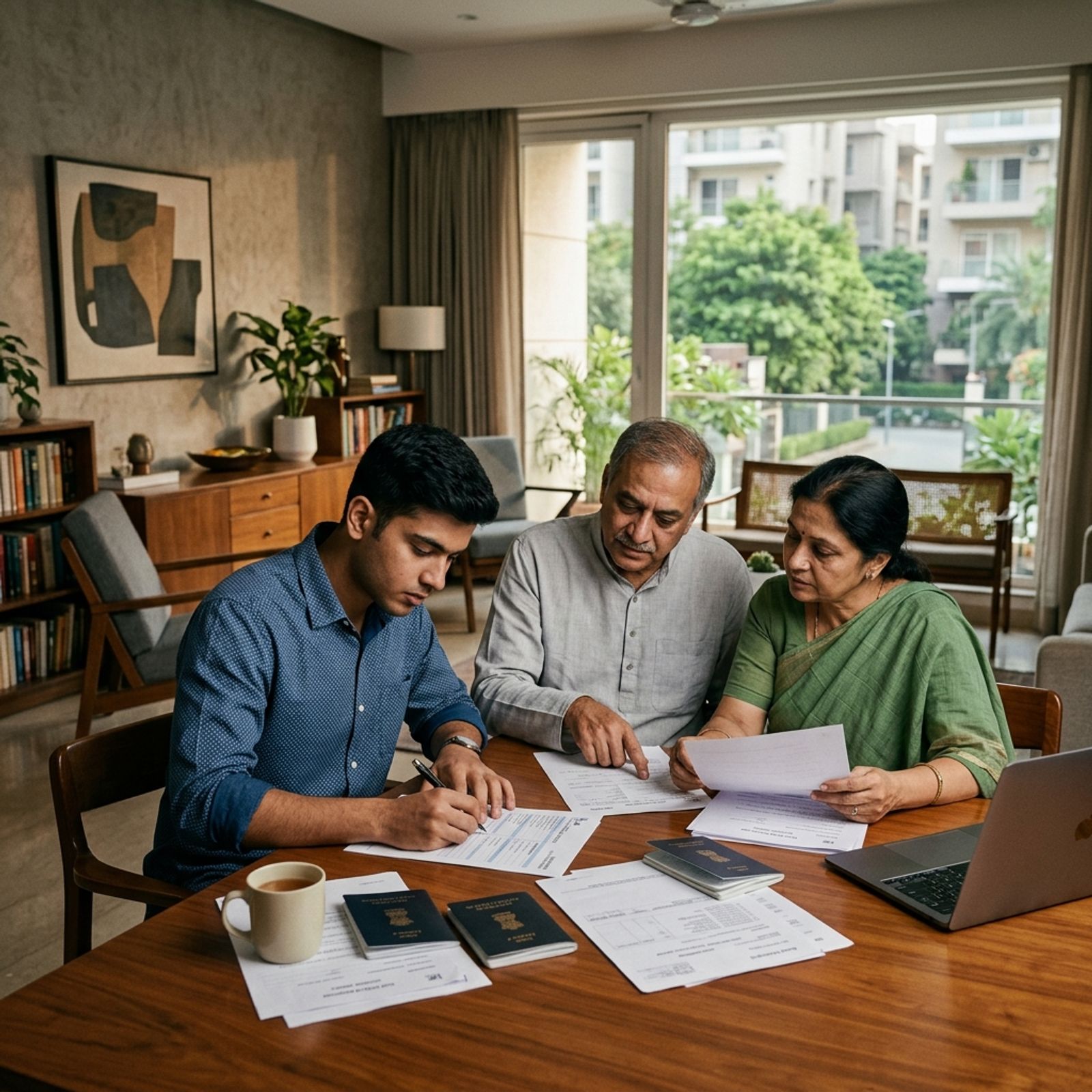
Indian students attending short-term programs in Singapore - like a 2-week summer school at NUS, a 4-week executive workshop, or a short academic internship - should apply for a Tourist Visa (Short-Term Visit Pass) if their course is under 30 days and offered by an approved institution. You do not need a full Student Pass for brief programs. However, if your internship involves actual work for a Singapore company, even unpaid, you cannot use a Tourist Visa and must apply for a Training Employment Pass instead. Reading the next 1,500 words is critical because applying for the wrong visa category leads to rejection, missed program start dates, and lost tuition fees. This guide gives you the exact, actionable framework to select the correct visa pathway, whether you are a Delhi University undergraduate heading to NTU or a recent graduate starting an academic internship in Biopolis.
Why Students Face Unique Visa Confusion: The Duration and Activity Boundary
Singapore's Immigration and Checkpoints Authority draws clear lines between tourist visits, short-term study, and formal education programs. The determining factors are not your age or student status - they are the duration of your course and the nature of your activities in Singapore.
What ICA's System Evaluates for Student Applicants:
- Course duration: Under 30 days (Tourist Visa) vs. over 30 days (Student Pass required)
- Institution type: Approved educational institution (NUS, NTU, SMU) vs. unregistered training provider
- Activity scope: Passive learning (lectures, workshops) vs. active work (internship duties, lab research)
- Sponsorship: Parental financial support vs. institutional sponsorship
The 2026 Rule: If your academic program is under 30 days and offered by an approved Singapore institution, apply for a Tourist Visa with your enrollment confirmation. If your program exceeds 30 days, your institution must register you in the SOLAR system for a Student Pass. For internships involving actual work, consult Singapore's Ministry of Manpower for Training Employment Pass requirements. For baseline document requirements, refer to our student visa financial documents.
Edge Case 1: The 30-Day Rule - When a Tourist Visa Is the Correct Choice
The Scenario: A second-year student from Ashoka University enrolls in a 14-day summer program at NUS focusing on Southeast Asian economics. She assumes she needs a Student Pass because the program is "academic."
Why This Misconception Causes Delays:
Student Pass applications via Singapore's SOLAR system require formal registration by the educational institution, processing times of 4-8 weeks, and additional documentation like medical examinations. For programs under 30 days, this process is unnecessary and may cause you to miss your program start date.
The Fix - Tourist Visa Protocol for Short-Term Study:
- Confirm institution approval: Verify that your program provider (NUS, NTU, SMU, or other) is an approved institution under Singapore's Committee for Private Education.
- Attach enrollment confirmation: Submit your official acceptance letter or registration confirmation showing course dates, your name, and passport number.
- State purpose clearly on Form 14A: Write "Short-term academic program attendance" rather than just "Tourism" to align your documentation.
- Include a cover note: "Applicant is attending [Program Name] at [Institution] from [Dates]. This program is under 30 days and does not require a Student Pass per ICA guidelines."
Critical Nuance: Even with a Tourist Visa, carry your enrollment confirmation and program schedule when entering Singapore. Immigration officers may ask about your purpose of visit, and having documentation ready prevents checkpoint delays.
Edge Case 2: The "Internship" Trap - When Unpaid Work Still Requires a Work Pass
The Scenario: A recent graduate from Amity University secures an unpaid research internship at a Singapore biotech lab. She applies for a Tourist Visa, reasoning that "no salary means no work pass needed."
Why This Triggers Deportation Risk:
Singapore's Ministry of Manpower defines "work" broadly: any activity that contributes to a company's operations, regardless of compensation. If immigration officers discover you are performing internship duties on a Tourist Visa, consequences include:
- Denied entry at Changi Airport
- Cancellation of your visa
- Potential multi-year entry ban for misrepresentation
The Fix - Training Employment Pass Protocol:
If your internship involves actual work duties (research assistance, data analysis, lab support):
- Confirm pass requirements early: Ask your Singapore host organization whether they will sponsor a Training Employment Pass (TEP) or Work Holiday Pass.
- Allow extended processing time: TEP applications take 3-6 weeks. Start the process at least 8 weeks before your intended start date.
- Do not enter on a Tourist Visa: Even if your internship starts later, entering Singapore on a Tourist Visa with intent to switch to a work pass is considered misrepresentation.
Example Cover Letter Snippet for TEP Applications:
"Applicant has secured an unpaid research internship at [Organization] under the Training Employment Pass framework. All duties are confined to academic research support. [Organization] has confirmed sponsorship and will submit the TEP application via MOM's EP Online portal."
Critical Nuance: Some academic internships that involve only observation (no hands-on work) may qualify for a Tourist Visa. Confirm the exact scope with your host organization and document this distinction in your application.
Edge Case 3: Financial Proof for Students - The Parental Sponsorship Package
The Scenario: A university student from Delhi has limited personal income but strong parental support. She worries her bank statements will not satisfy ICA's financial requirements.
Why Generic Advice Fails:
Submitting only a student's minimal bank statements without context triggers "insufficient funds" flags. ICA needs to verify that someone credible accepts financial responsibility for your trip.
The Fix - The Three-Document Parental Sponsorship Protocol:
- Notarized Sponsorship Letter: A letter on ₹100 stamp paper from your parent stating: "I, [Parent Name], sponsor my child [Student Name], Passport #[Number], for their short-term program in Singapore from [Dates]. I accept full financial responsibility for travel, accommodation, and living expenses." Include the parent's PAN, contact details, and signature.
- Parent's Financial Proof: Attach your sponsor's last 6 months' bank statements and latest ITR acknowledgment. Highlight consistent income or savings that demonstrate capacity to support your trip.
- Relationship Verification: Include your birth certificate or other official document linking you to the sponsor.
Critical Nuance: If your parent's name differs from yours (e.g., different surnames), add a brief explanatory note: "Applicant's surname reflects [reason: marriage, cultural naming convention]. Relationship to sponsor is verified by attached birth certificate."
The Documentation Stack That Actually Works for Student Applicants
To ensure your application aligns with your program type, submit this exact package:
For Tourist Visa (Short-Term Programs Under 30 Days)
- Form 14A with purpose stated as "Short-term academic program attendance"
- Official enrollment/acceptance letter from approved Singapore institution
- Licensed hotel booking or institutional accommodation confirmation
- Parental sponsorship package (if student lacks personal funds)
- Cover letter explicitly stating program duration and return date to India
For Student Pass (Programs Over 30 Days)
- SOLAR registration confirmation from your Singapore institution
- Institution's letter of support
- Medical examination report (if required by institution)
- Parental sponsorship package or institutional funding letter
- Academic transcripts and proof of prior enrollment in India
For Training Employment Pass (Internships with Work Duties)
- MOM application reference number from sponsoring organization
- Internship offer letter detailing duties, duration, and supervision
- Academic institution endorsement letter (if applicable)
- Parental sponsorship package for living expenses
- Cover letter confirming no unauthorized work will be performed
Critical Final Check: Before submission, review your application from an immigration officer's perspective. Does every document answer the question "Why will this student return to India after their program?" If any element is vague, strengthen it before submitting.
How ExpressVisaSG's Delhi Team Accelerates Student Visa Processing
Many students in Delhi NCR lose time because generic agents do not distinguish between short-term study and formal education pathways. If you are a student at Delhi University, Ashoka, Amity, or other NCR institutions, our consultants offer a "Student Fast-Track Review": we pre-audit your program details to determine the correct visa category, coordinate parental sponsorship documentation, and draft strategic cover letters that align with ICA's expectations for student applicants. We have helped over 110 students from Delhi NCR avoid student visa rejection by matching their visa type to their actual program structure.
Heading to Singapore for a summer program or internship? Do not risk missing your orientation due to a visa category error. WhatsApp our student visa consultant in Delhi NCR for a free profile review. We will verify whether your program requires a Tourist Visa, Student Pass, or Training Employment Pass and strengthen your application accordingly.
Ready to Apply for Your Singapore Visa?
Get expert assistance from India's trusted Singapore visa agency.
Frequently Asked Questions
Common questions related to this topic.