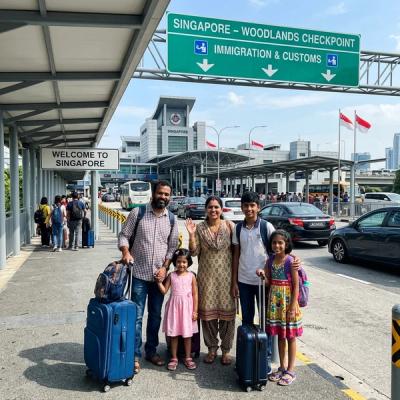
Single vs. Multiple Entry Singapore Visa for Indians: How Does ICA Decide?
Read the definitive guide on "Single vs. Multiple Entry Singapore Visa for Indians: How Does ICA Decide?". Expert advice on requirements, documents, and application process for Singapore visas from India.
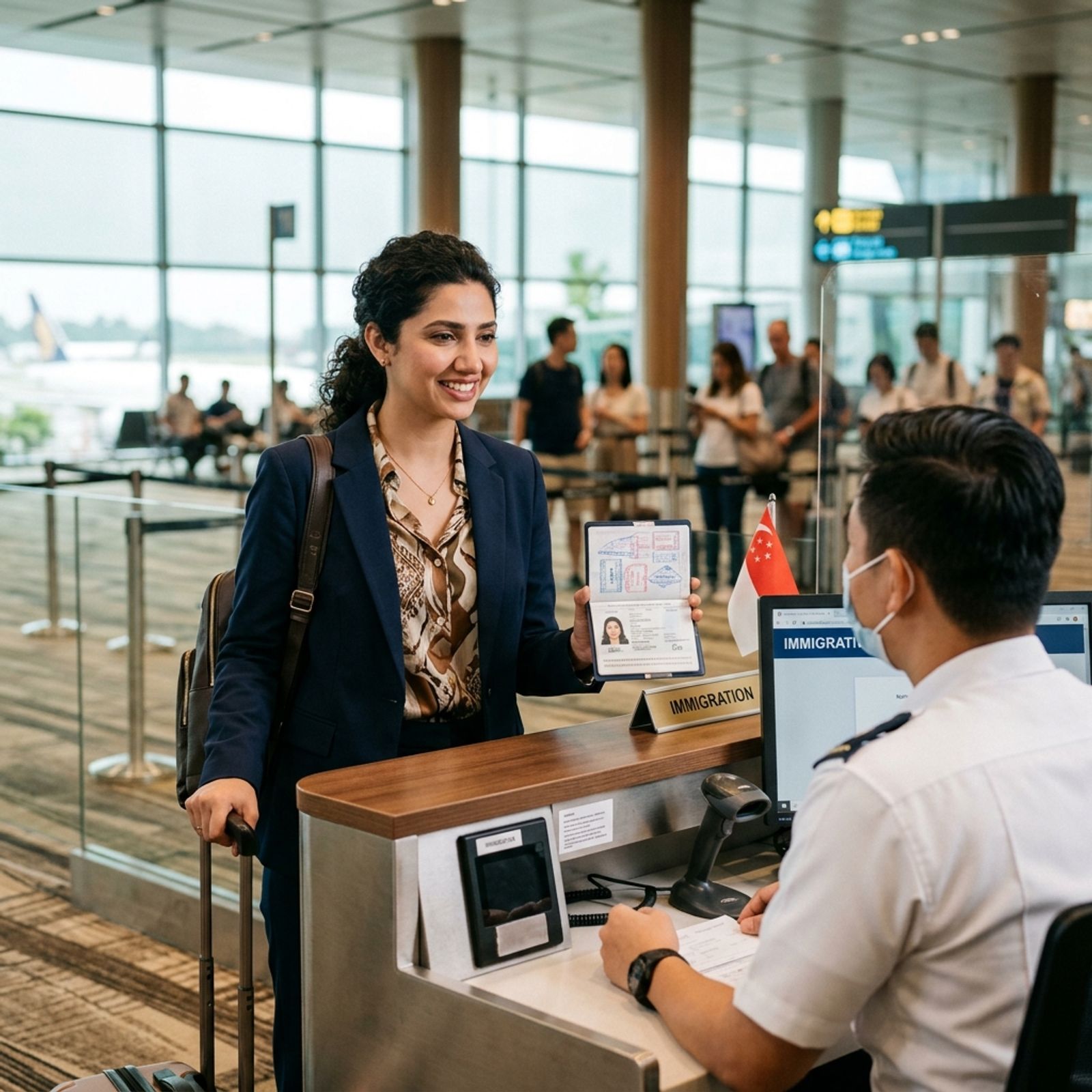
The Reality Check: Visa Entry Type Is Entirely at ICA Discretion
If you are an Indian passport holder who has recently received a Singapore visa, you may have noticed a critical detail on your approval letter: the entry type. Some applicants receive a single entry visa valid for 30 days. Others receive a multiple entry visa valid for one or two years. This disparity often leads to confusion and frustration. Why did your friend receive a two-year multiple entry visa while you received a 30-day single entry permit?
Here is the transparent truth: you cannot select, pay for, or request a specific entry type on ICA Form 14A. The visa application fee is identical regardless of whether a single or multiple entry visa is issued. The outcome is entirely at the discretion of the Immigration and Checkpoints Authority officer reviewing your file. No authorized agent, consultant, or third party can guarantee, influence, or expedite a multiple entry outcome.
This policy is not arbitrary. It is a risk-management framework designed to protect Singapore's immigration integrity while facilitating legitimate travel. Understanding this upfront removes unrealistic expectations and redirects your energy toward what you can control: submitting the strongest possible application. This foundational clarity directly supports the search intent behind `Single vs. Multiple Entry Singapore Visa for Indians`.
How ICA Officers Evaluate Entry Type: The Core Assessment Framework
When an ICA officer reviews your application, they are not deciding between "reward" and "penalty." They are assessing risk through three core pillars: travel credibility, financial stability, and return assurance. The entry type granted is a calibrated response to that assessment.
Travel credibility refers to your history of compliant international travel. Have you visited other countries and respected their immigration rules? Do you have a pattern of timely departures and lawful stays? Financial stability examines whether you have sufficient, verifiable resources to fund your trip without seeking unauthorized work. Return assurance evaluates your concrete ties to India: employment, property, family dependencies, or ongoing education.
These pillars are weighted differently for each applicant. A business consultant with frequent client meetings in Singapore may justify multiple entries based on documented need. A first-time tourist with modest savings may receive single entry as a standard, cautious approach. The decision is case-specific, evidence-based, and not governed by rigid public criteria. This analytical approach directly supports the keyword `ICA multiple entry rules` by explaining the underlying logic officers apply.
Factors That Increase Your Chances of Receiving a Multiple Entry Visa
Strong International Travel History
One of the most significant factors favoring multiple entry approval is a robust record of compliant international travel. If your passport contains visas and entry stamps from countries with stringent immigration standards, such as the Schengen Area, United Kingdom, United States, Australia, or Japan, this signals low overstay risk.
Why this matters: Officers interpret prior compliant travel as evidence that you understand and respect immigration rules. You have demonstrated that you can manage multi-destination itineraries, adhere to stay durations, and depart on schedule.
How to present this evidence: Include clear copies of relevant visa pages and entry stamps in your application. If you have a complex travel history, attach a one-page chronological summary listing countries visited, dates, and purposes. This helps officers quickly grasp your credibility without manual passport review.
Higher Income Brackets and Documented Financial Depth
Financial strength is not about having a single large balance. It is about demonstrating consistent, legitimate income and accessible reserves. Applicants who file annual Income Tax Returns, maintain healthy bank balances over six months, and own assets such as property or investments present a lower financial risk profile.
Why this matters: Officers assess whether you can fund multiple trips without financial strain. Consistent ITR filings, salary slips, and CA-certified financial statements for self-employed applicants provide macro-level proof of stability that a three-month bank statement cannot.
How to strengthen your profile: Submit your ITR acknowledgment for the last two assessment years, six months of bank statements with consistent activity, and any asset documentation. For business owners, include GST registration, audited financials, and CA-certified net worth statements. This layered approach directly supports the keyword `Singapore multiple entry visa criteria` by providing verifiable financial depth.
Frequent Business Ties or Family Connections in Singapore
Legitimate repeat-travel needs significantly increase multiple entry consideration. If you have recurring business meetings, ongoing client projects, or immediate family residing in Singapore, these factors justify the convenience of multiple entries.
Required supporting documents:
- For business: Invitation letters from Singapore companies, signed contracts with project timelines, and employer letters confirming the need for frequent travel
- For family: Proof of relationship (birth certificates, marriage certificates), copies of your family member's Singapore pass (Employment Pass, S Pass, or Permanent Resident status), and a sponsorship letter if applicable
- For both: A cover letter explaining the frequency and purpose of planned visits, with approximate dates for the next 12 months
Officers evaluate whether your stated need aligns with documented evidence. Vague claims of "future travel plans" without supporting proof carry little weight. Concrete, verifiable commitments do.
Factors That Typically Result in a Single Entry Visa
First-Time Travelers to Singapore or Limited International History
If you have never visited Singapore or have minimal international travel experience, receiving a single entry visa is standard procedure, not a negative judgment. Officers use single entry as a cautious, evidence-building approach for new applicants.
Why this is reasonable: Without prior travel compliance data, officers cannot confidently assess your risk profile for multiple entries. A successful first trip, with timely departure and respectful conduct, builds the credibility needed for multiple entry consideration on subsequent applications.
How to leverage this: Treat your first Singapore visa as an opportunity to establish a positive travel record. Comply fully with all conditions, depart on schedule, and retain documentation of your trip. When you reapply, reference this compliant history to support a multiple entry request.
Unemployed Applicants or Minimal Financial Documentation
Applicants who are not formally employed, have irregular income, or submit limited financial proofs often receive single entry visas. This reflects conservative risk management, not personal disapproval.
Why this occurs: Without consistent income documentation or substantial savings, officers cannot confidently verify your capacity to fund multiple trips. Reliance on sponsorship, while acceptable, may trigger a more cautious entry type if the sponsor's profile is also modest.
How to strengthen future applications: Build a documented income trail through bank statements showing regular deposits, file ITRs even if below taxable threshold, and retain employment or project contracts. Over time, this creates the financial narrative that supports multiple entry consideration.
Short or Vague Itineraries Without Clear Return Anchors
Applications that state a generic purpose like "tourism" without specific dates, accommodation details, or India ties may receive single entry as a precaution.
Why this matters: Officers need to verify that your travel intent is genuine and that you have concrete reasons to return home. Vague itineraries create uncertainty about your plans and compliance likelihood.
How to address this: In your cover letter and Form 14A, provide a clear day-wise itinerary, confirmed hotel bookings, and explicit ties to India such as employment return dates, family dependencies, or property ownership. This replaces ambiguity with verifiable structure.
Does a Single Entry Visa Mean Your Application Was Weak?
No. A single entry visa does not indicate that your application was weak, flawed, or rejected in any way. It is a standard, appropriate outcome for many first-time travelers, moderate-income applicants, or those with limited international history.
Think of entry type as a calibration tool, not a scorecard. Single entry allows you to visit Singapore, demonstrate compliant travel behavior, and build the credibility needed for multiple entry on future applications. Many applicants who initially receive single entry later obtain one or two-year multiple entry visas after establishing a positive travel record.
This reassurance directly supports the keyword `validity of Singapore multiple entry tourist visa` by clarifying that validity periods and entry types are separate decisions based on evolving applicant profiles.
Understanding Multiple Entry Visa Validity Periods for Indian Passport Holders
If you are granted a multiple entry visa, its validity period typically falls into one of three ranges:
- 30 days from date of issue: This is essentially a single-trip window with multiple entry flexibility within that short period. It is uncommon but may be issued for specific short-term business needs.
- 1 year from date of issue: The most common multiple entry validity for Indian tourists with moderate travel history and financial strength.
- 2 years from date of issue: Reserved for applicants with strong travel credibility, high income documentation, or verified frequent-travel needs.
Critical distinction: Validity period and entry type are separate decisions. A two-year multiple entry visa still imposes a stay limit per entry, typically 14 to 30 days. You cannot stay in Singapore continuously for two years. You must depart and re-enter to reset your stay duration.
How officers determine validity: They assess your justification for repeat travel, the strength of your supporting documents, and your overall risk profile. A business consultant with quarterly client meetings may justify two years. A tourist planning one annual family visit may receive one year. Always check your visa approval letter for exact validity dates, entry conditions, and stay limits.
What Agents Can and Cannot Do Regarding Entry Type
Ethical transparency is essential. No authorized visa agent, consultant, or third party can guarantee, influence, or expedite a multiple entry outcome. Claims of "MEV packages," "premium processing," or "officer connections" are misleading and potentially fraudulent.
What legitimate agents can do:
- Optimize your documentation: Ensure forms are complete, financial proofs are clearly presented, and supporting letters follow officer-ready formats
- Provide pre-submission review: Identify potential gaps or inconsistencies before official submission
- Offer procedural guidance: Explain SGAC requirements, checkpoint protocols, and document formatting rules
What they cannot do:
- Guarantee entry type or validity period
- Influence ICA officer decisions through unofficial channels
- Expedite processing outside standard timelines
Final decisions rest solely with ICA officers based on submitted evidence. Trust agents who emphasize documentation quality over outcome promises.
Actionable Optimization Tips for Future Multiple Entry Consideration
While you cannot control the officer's decision, you can strengthen your profile for future applications:
- Build compliant travel history: Start with regional trips to Southeast Asia, maintain perfect immigration records, and retain entry/exit documentation
- Strengthen financial documentation: File ITRs annually, maintain consistent bank activity, and retain employment or business proofs
- Document legitimate repeat-travel needs: Keep copies of business contracts, family event invitations, or multi-destination itineraries that justify multiple entries
- Always comply with current visa conditions: Depart on time, respect stay durations, and maintain clean immigration records
- Reapply strategically: Submit a new application after 6 to 12 months with enhanced documentation and travel proof. Reference your prior compliant Singapore visit in your cover letter
These practices transform uncertainty into a structured pathway toward multiple entry consideration.
Essential Related Resources
- Review the full Tourist Visa Document Checklist to ensure your application is perfectly assembled.
- Read our guide on the Most Common Singapore Visa Rejection Reasons and how to avoid them.
- Ready to proceed? Start your Singapore Visa application with ExpressVisaSG's experts today.
Ready to Apply for Your Singapore Visa?
Get expert assistance from India's trusted Singapore visa agency.
Frequently Asked Questions
Common questions related to this topic.